Construction
Laminate is a layered flooring product with a decorative timber-effect surface. LVT is a vinyl-based flooring system designed to reproduce wood, stone and other finishes.
Laminate and luxury vinyl tile can both create a convincing wood-effect floor, but they are different flooring products with different construction, fitting methods and practical considerations.
Neither flooring type is automatically better. The right choice depends on the room, the finish you want, how the space is used and the flooring product itself.
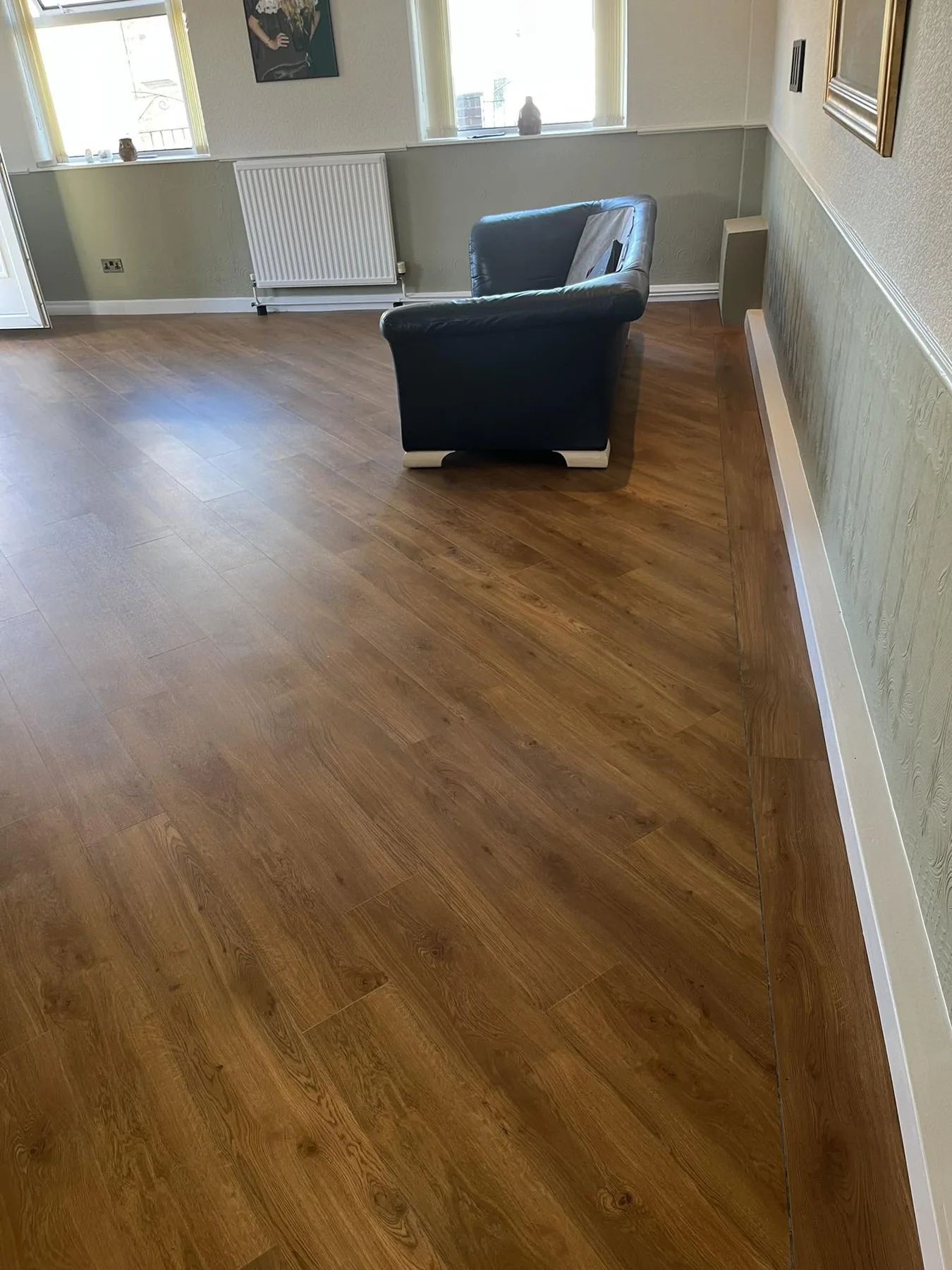
Laminate is a popular hard-floor option for lounges, bedrooms, dining rooms, hallways and other living spaces, particularly where a traditional timber-plank appearance is wanted.
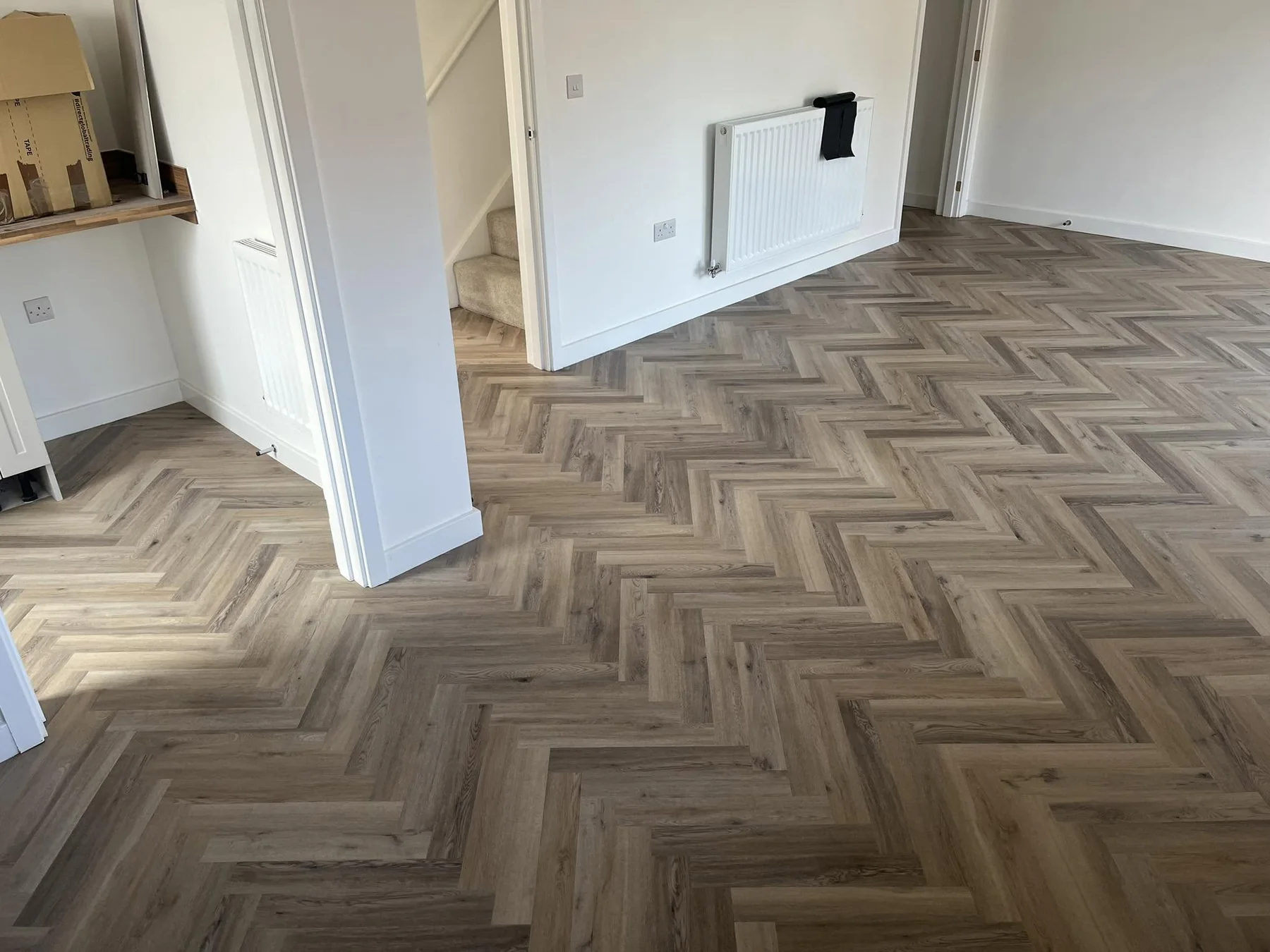
LVT offers a different flooring construction and is available in a broad range of plank, tile and herringbone designs. It is frequently considered for kitchens, hallways, open-plan rooms and commercial interiors.
Rather than choosing based on the name alone, it is worth considering the room, preparation required and the exact flooring product being installed.
They may look similar once installed, but laminate and LVT achieve that finish in different ways.
Laminate is a layered flooring product with a decorative timber-effect surface. LVT is a vinyl-based flooring system designed to reproduce wood, stone and other finishes.
Both offer realistic wood effects, while LVT also gives plenty of flexibility through plank, tile and herringbone layouts.
Laminate is widely used through living spaces and bedrooms. LVT is also regularly considered for kitchens, hallways, open-plan rooms and commercial environments.
The installation method varies by product. Laminate is commonly installed as a floating floor, while LVT products may use different fitting systems.
Both need an appropriate base underneath. The condition and level of the existing floor can affect the quality of the final installation.
Colour is only part of the decision. Plank proportions, texture, pattern and laying direction all influence how the finished room looks.
The visual difference can sometimes be subtle, particularly with modern flooring products.
Laminate is available in a wide range of natural, warm, pale, grey and dark timber effects.
It works particularly well when the goal is a clean, consistent wood-plank appearance through a room or several connected spaces.
Explore laminate flooring ↗LVT offers plenty of wood-effect styles alongside layouts such as herringbone, allowing the floor itself to become a stronger design feature.
It can be particularly effective across kitchens, hallways and open-plan areas where the flooring runs through a larger space.
Explore LVT flooring ↗The photographs are often more useful than a product description when you're deciding what style suits your home.
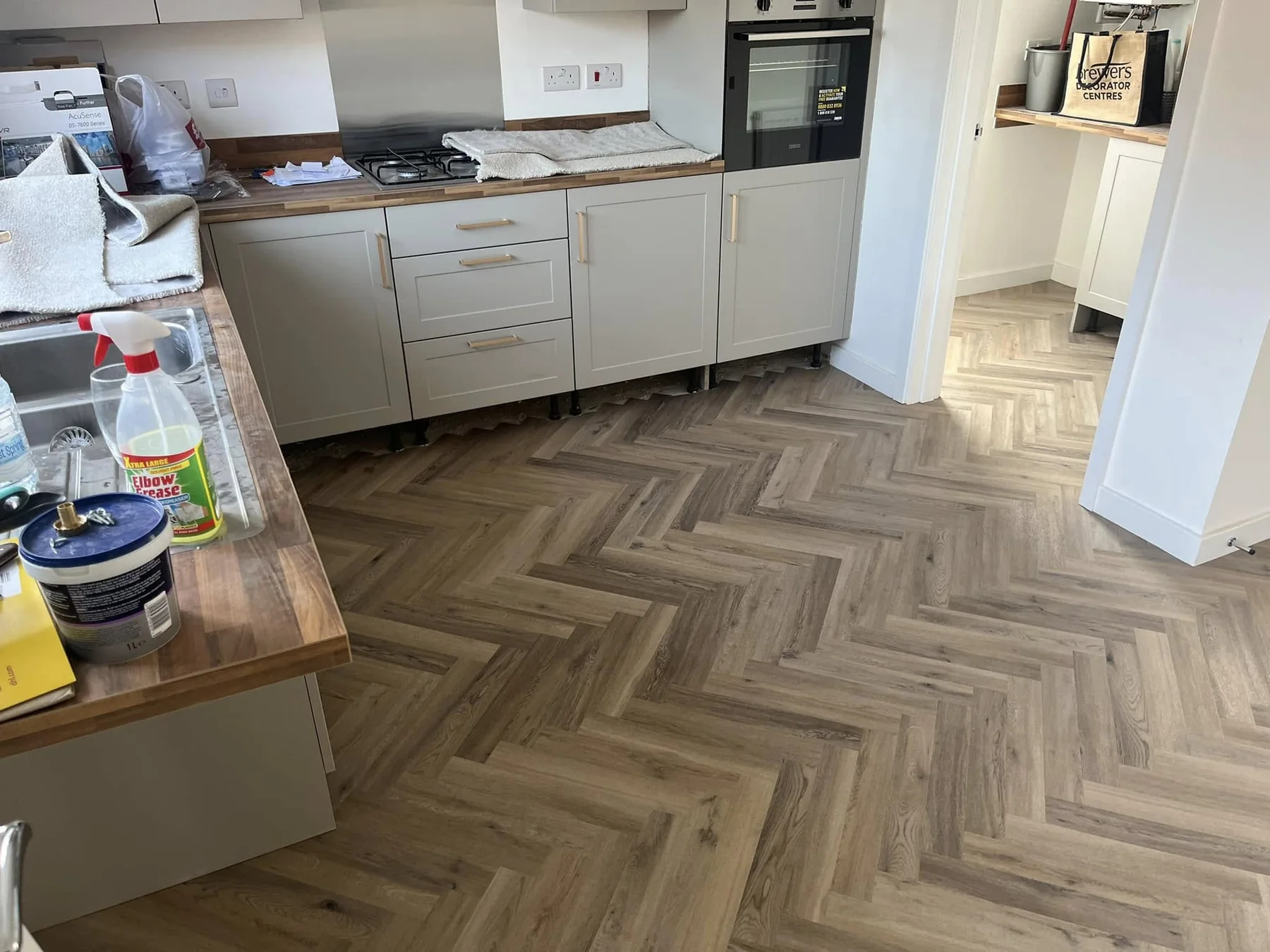

There is no single flooring choice for every room. Think about how the space is used as well as how you want it to look.
Laminate can create a traditional timber-plank look, while LVT gives additional design possibilities such as herringbone.
Where carpet isn't wanted, laminate can provide a clean wood-effect surface across a bedroom.
Kitchens introduce different practical considerations, so the suitability and care requirements of the exact flooring product should be checked.
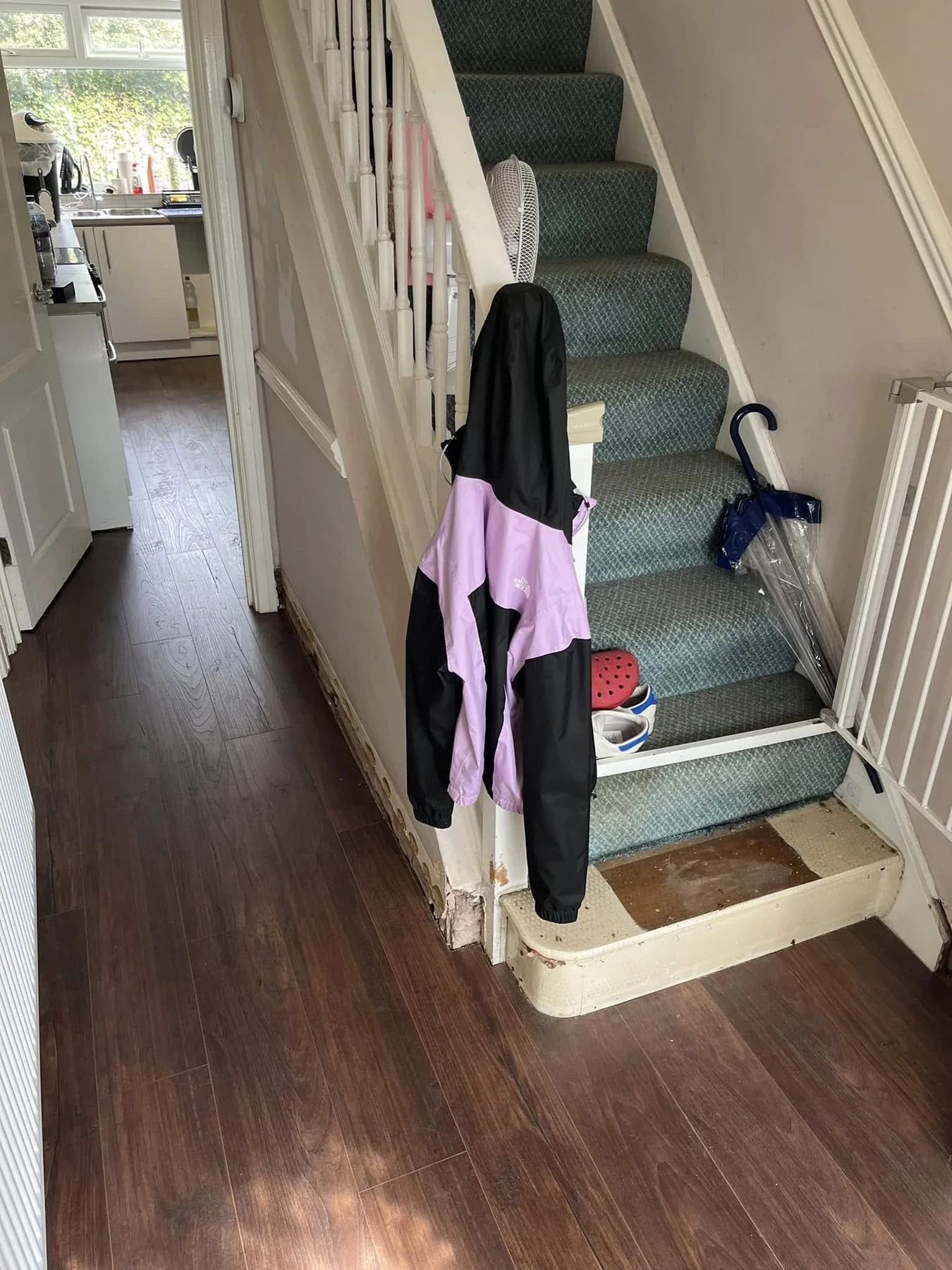
Hallways often connect several spaces, making floor preparation, plank direction and adjoining flooring particularly important.
Large areas can make wood-effect plank or herringbone layouts particularly noticeable as part of the overall room design.
The right flooring depends on foot traffic, use of the room and the specification of the product being considered.
A premium flooring product cannot compensate for unsuitable preparation beneath it.
Existing carpet, laminate, vinyl or another floor covering may affect what needs to happen before installation begins.
Significant dips, high points or damage can influence both laminate and LVT installations.
Finished height should be considered around doors, thresholds and where the new flooring meets another room.
Different products have different fitting requirements, so preparation should be based on the exact flooring being installed.
Both laminate and LVT are designed to provide practical hard-floor surfaces, but care guidance varies between products.
Regular vacuuming or sweeping can remove dust and loose debris from either floor. Further cleaning should follow the manufacturer's instructions for the particular product.
It is also worth considering entrance mats, furniture protection and how the room is used when trying to keep any flooring looking its best.
Rather than assuming every laminate or every LVT product behaves identically, check the specification and care instructions of the flooring you are considering.
Start with the room rather than the flooring name. These are some of the questions worth considering.
If you want a traditional plank appearance, laminate may already offer exactly what you need. If herringbone or other layout options appeal, LVT may provide more possibilities.
Think about the room itself, how frequently it is used and any practical demands the floor will need to handle.
The existing surface and its condition can influence preparation, fitting and the suitability of different flooring systems.
Consider adjoining floors, doorways and whether you want the same finish to continue through multiple areas.
If herringbone is central to the look you want, LVT provides plenty of products designed around that type of layout.
Send over photographs and details of the room. You don't need to decide between laminate and LVT before starting the conversation.
Read the individual flooring guides or go directly to the fitting service you're interested in.
Explore the advantages of laminate, suitable rooms, preparation, maintenance and what to consider before choosing it.
Read laminate guide ↗See herringbone, plank and commercial LVT work alongside information about preparation and professional fitting.
Explore LVT fitting ↗SP Flooring Services provides laminate and LVT flooring across Rotherham, Sheffield, Barnsley, Doncaster and surrounding areas.
The best answer often depends on the room and the exact flooring products you're considering.
Ask about your floorThey are constructed differently. Laminate is a layered flooring product with a decorative surface, while LVT is a vinyl-based flooring system. Both are available in realistic wood-effect finishes.
Both modern laminate and LVT can produce convincing wood effects. The appearance depends heavily on the individual product, its texture, pattern and how it is installed.
Both can work in living spaces. The decision may come down to the style you prefer, the flooring product, the condition underneath and whether you want a traditional plank or a layout such as herringbone.
Both can be considered for hallways. Because hallways often experience regular foot traffic and connect multiple rooms, product suitability, preparation, transitions and layout are especially important.
Yes. SP Flooring Services provides professional laminate and LVT fitting alongside carpet and vinyl flooring.
SP Flooring Services covers Rotherham, Sheffield, Barnsley, Doncaster and surrounding South Yorkshire areas.
Send your location, room details, approximate measurements and a few photographs and discuss which flooring options could suit the space.